An isolated human preparation
Retatrutide in the human atrium
The contraction becomes more interesting when another compound strengthens it, or a receptor blocker interrupts it.
Right atrial preparations
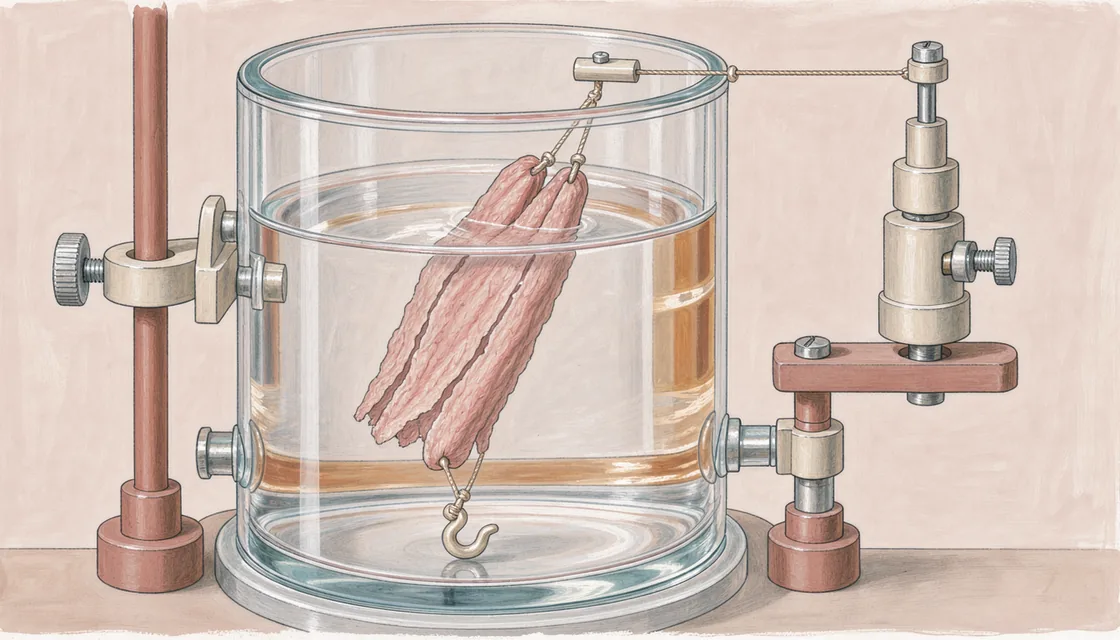
The experiment used isolated human right atrial tissue from cardiac surgery patients. Retatrutide at concentrations of 10–100 nM increased the force of contraction in a concentration-dependent manner. This is an ex vivo experiment: living tissue examined outside the body.
The technical word in the paper’s title is “inotropic”, referring to contraction force. It gives the result a precise subject. I’m much happier discussing this response than attaching a favourable adjective to the heart as a whole. Greater force could be worth investigating in several directions; deciding which direction helps a person takes a different experiment.
The source of the tissue also belongs in the account. These were preparations from cardiac surgery patients. The tissue’s starting condition seems worth examining before claiming a universal human-heart effect.
Receptor blockade
The reported contraction response was blocked by antagonists at GLP-1, GIP and glucagon receptors. The study implicates cAMP signalling through the receptors targeted by retatrutide. Here, a blocker gives the receptor a role to answer for in the experiment.
This is the satisfying part for me: the investigators could interfere with the response. A proposed explanation had to survive a deliberate interruption. The blockade experiments make the receptor question concrete. Assigning a neat fraction of the total effect to each receptor would require a further analysis.
Cilostamide and propranolol
Cilostamide, described in the study as a PDE-III inhibitor, potentiated retatrutide’s contraction response; propranolol did not block it. These are findings about compounds present in the isolated-tissue experiment. They make the surroundings of the peptide part of the biological question.
The response’s survival after this attempted blockade intrigues me. It forces an explanation to become more specific than “heart stimulation”. The observation supplies a research lead, with no instructions for combining medicines in a person.
The review of acute contractile effects in human cardiac preparations places this kind of work in a wider experimental setting and identifies cardiac data gaps. The mouse atrial experiment supplies an immediate complication: a faster rate without increased contraction force.